Adding Numbers | Elementary

1st and 2nd Grade

What is addition?

Definition

Addition is the operation of adding one quantity to another.

In addition, the numbers added together are called addends. The result of an addition is called the sum.

Example
What are the numbers in an addition called?

To know what the + and = symbols mean, see the Lexicon of Mathematical Symbols concept sheet.

How to add numbers with objects or drawings

Many types of objects can be used to represent numbers. For example, you can use toy cars, tokens, and pencils to help you with your calculations.

Example

4 + 3 = ?

I must add 3 balloons to 4 other balloons.

Addition example with 1-digit numbers - step 1 of 2

To find the total number of objects, I add the two quantities together.

Addition example with 1-digit numbers - step 2 of 2

I calculate 7 balloons in total.

Example

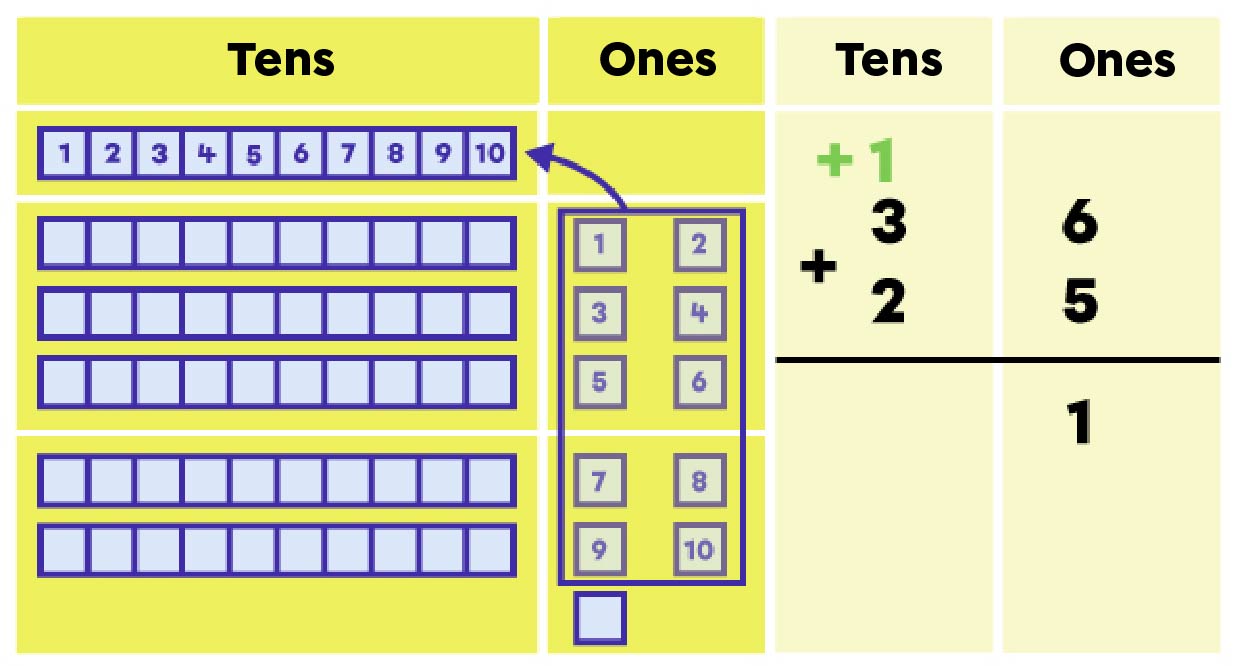
36 + 25 = ?

Addition example with 2-digit numbers - step 1 of 3
  1. To add numbers with multiple digits, I start by adding the ones. If I have enough ones to form a group of 10, I regroup it to the tens place.

picture
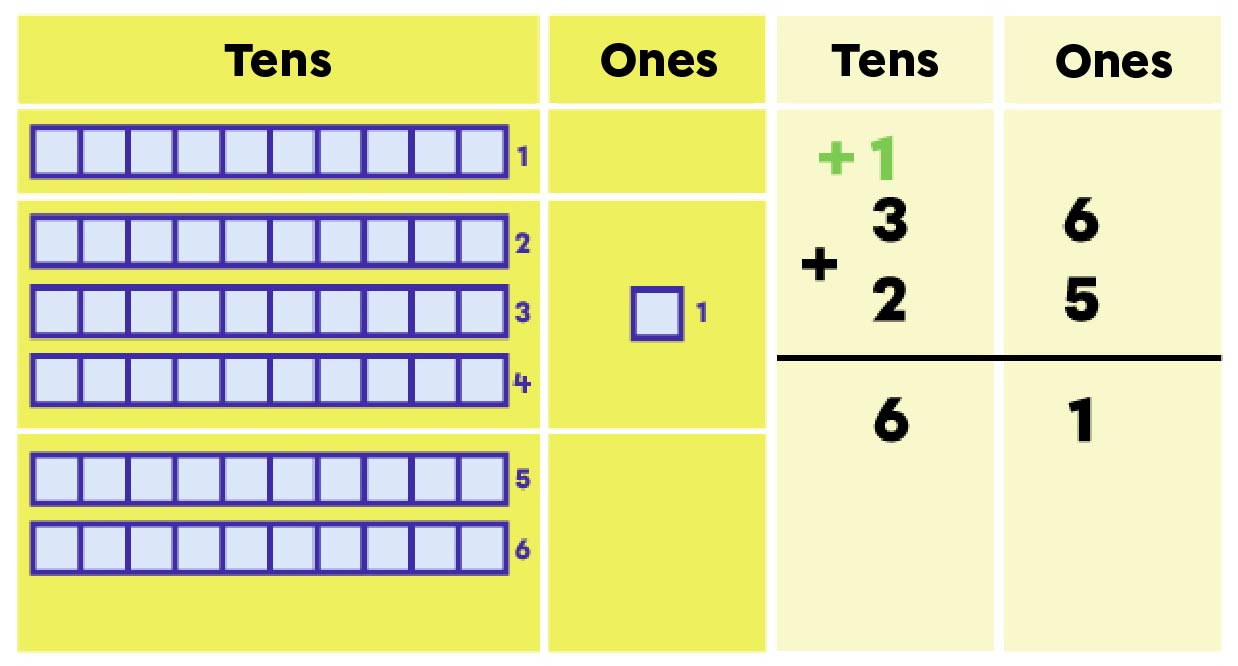
  1. I add the tens and determine if a hundred can be made.

    There are 6 tens. Since I cannot make groups of 10 tens and there are no hundreds, I have finished the addition.

picture

36 + 25 = 61

Adding Numbers (1st and 2nd grade)

Adding Numbers (1st and 2nd grade)

Exercise - Adding Numbers (1st and 2nd grade)

'

See also

3rd and 4th Grade

What is addition?

Definition

Addition is the operation of adding one quantity to another.

In addition, the numbers added together are called addends. The result of an addition is called the sum.

Example
What are the numbers in an addition called?

Adding numbers in columns

Rule

To add numbers in columns, I have to follow these steps:

  1. I write the numbers one below the other by lining up the digits according to their place value.

  2. I add the ones and I write the ones digit of the sum below the line.
    If there is a ten, I regroup it above the digit in the tens position.

  3. I repeat step 2 for all positions. I do not forget to add the regrouped amount if there is one.

Example

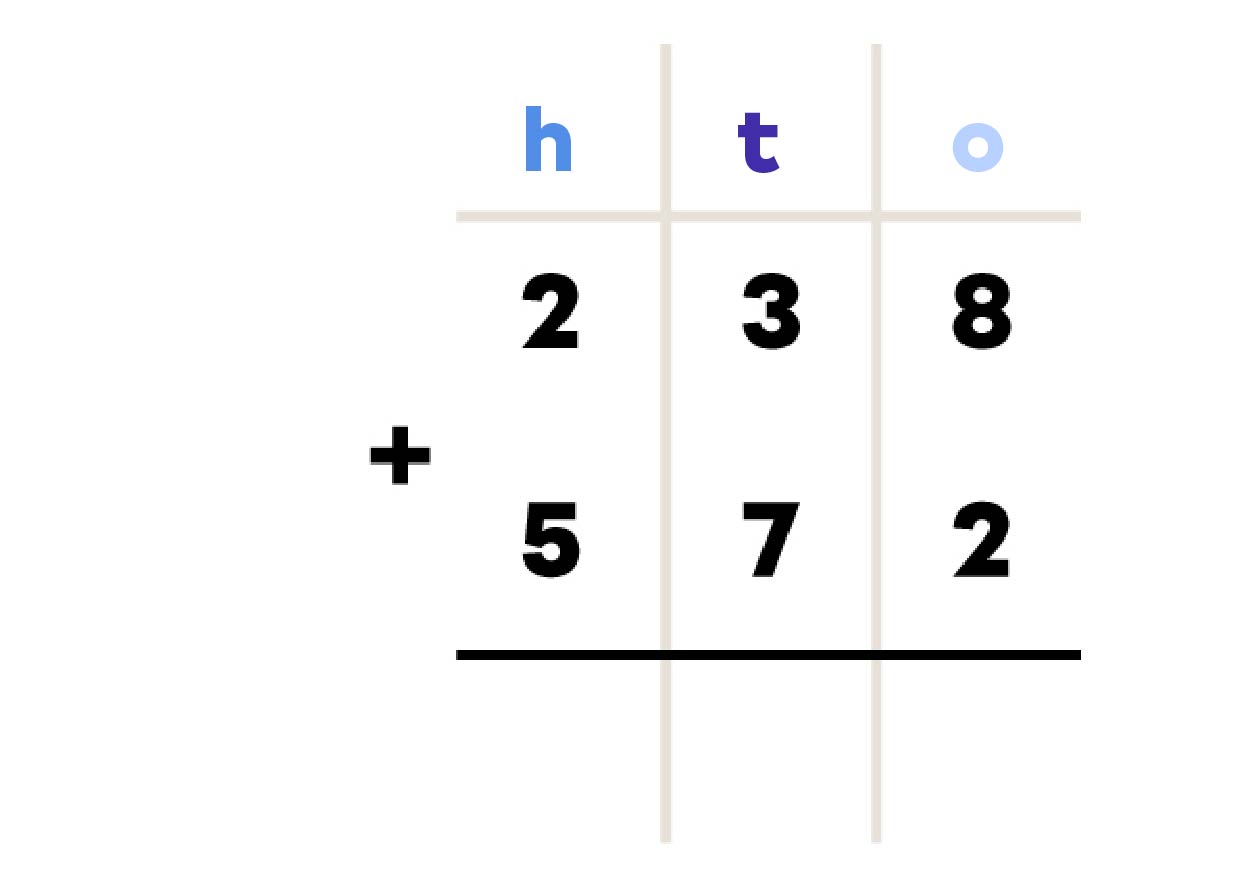
238 + 572 = ?

  1. I write the numbers one below the other by lining up the digits according to their place value.

etape 1
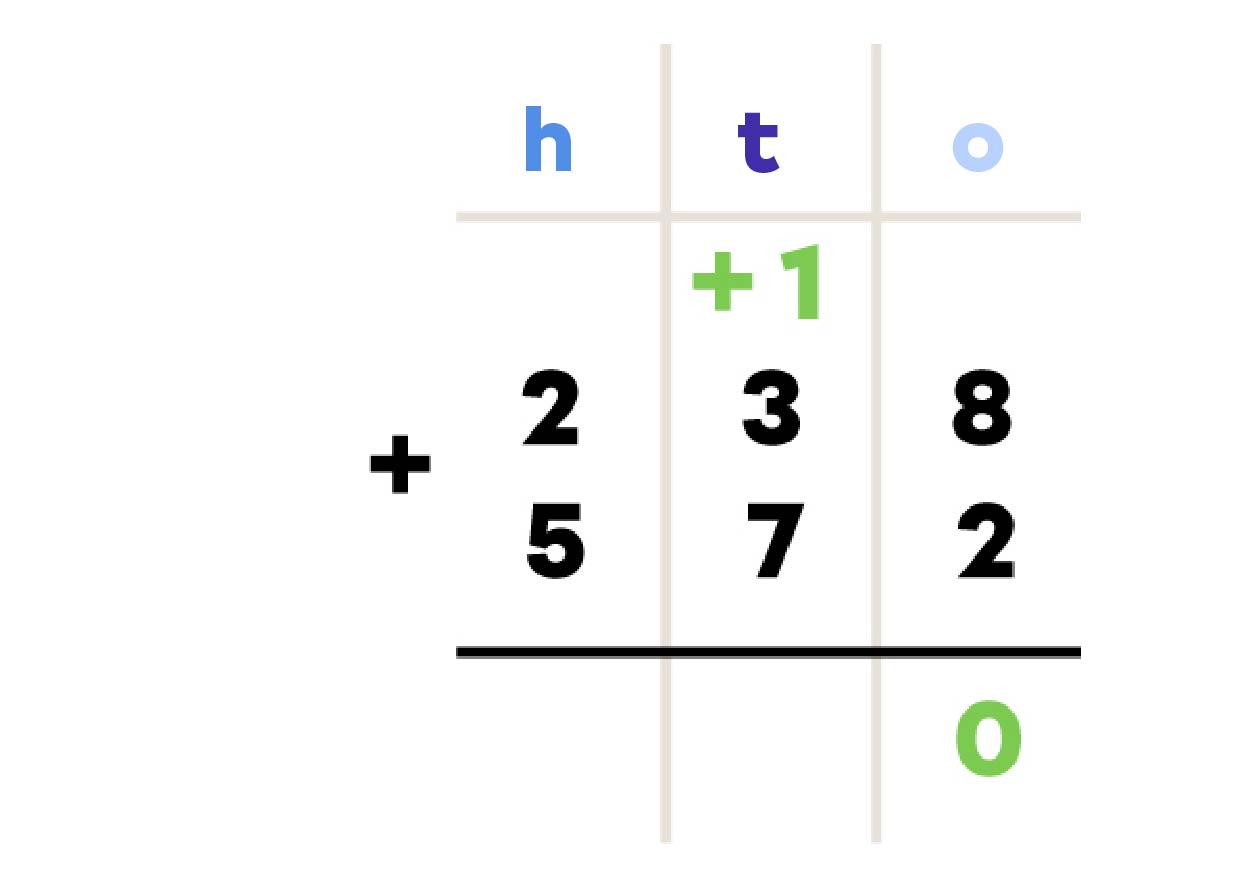
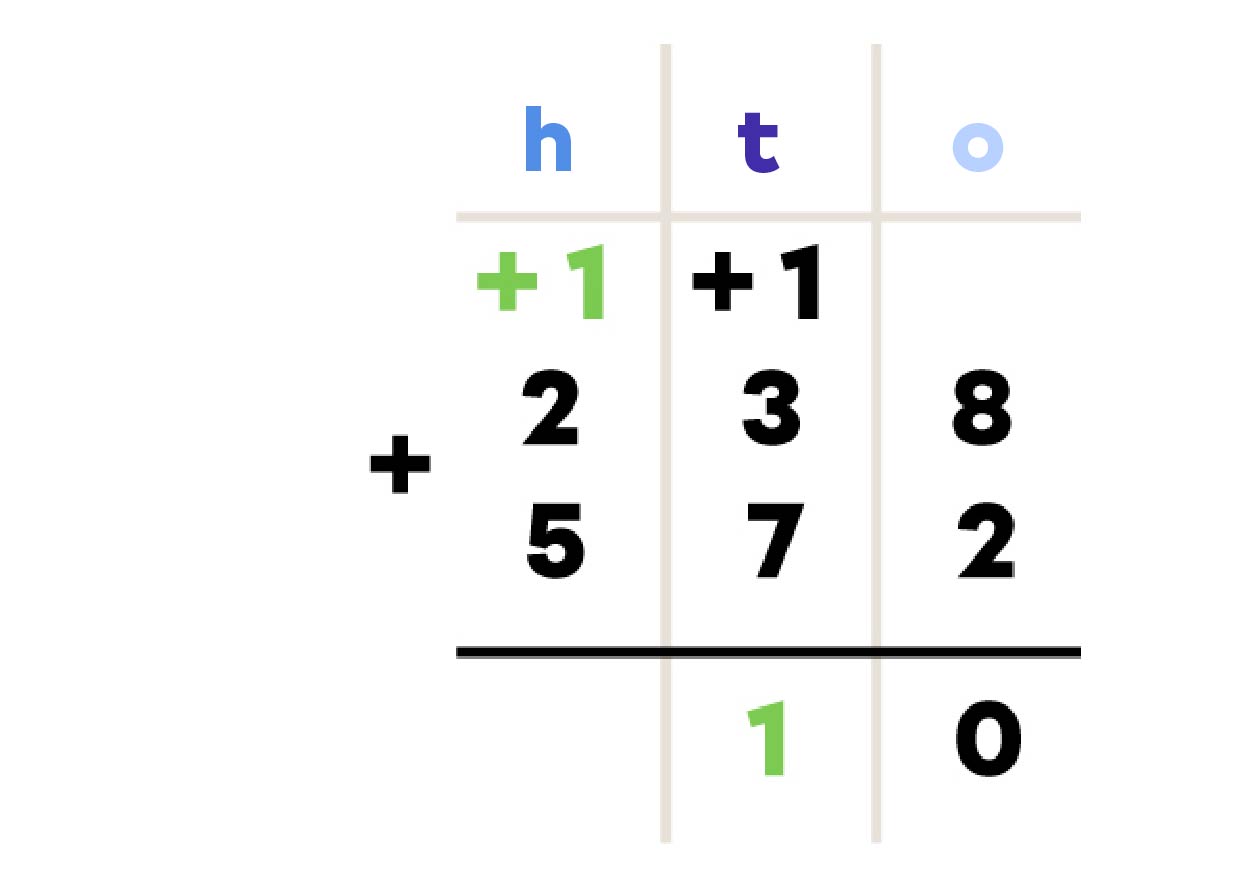
  1. I add the ones and I write the ones digit of the sum below the line.

    If there is a ten in the result, I regroup it above the digit in the tens position.

    8  + 2 = 10

etape 2
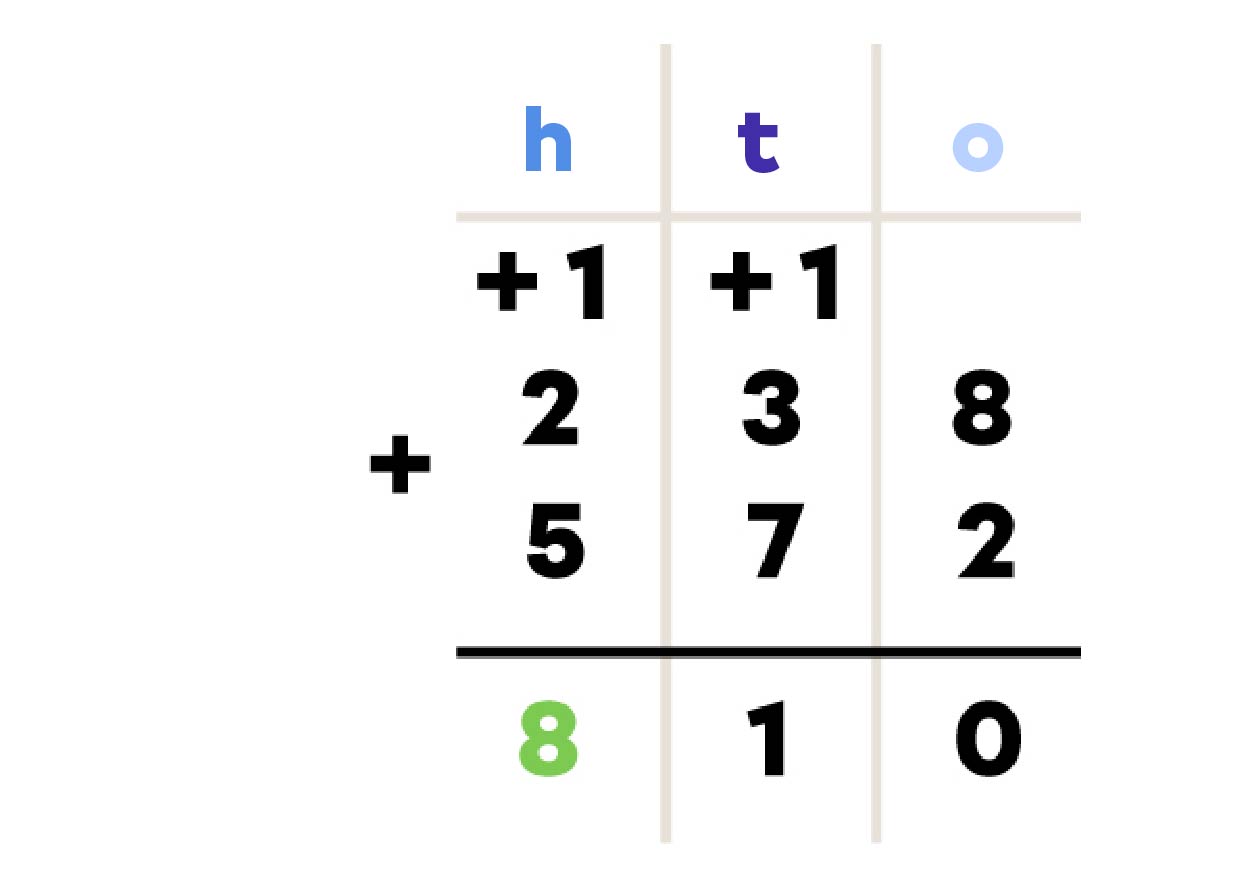
  1. I repeat step 2 for all positions. I do not forget to add the regrouped amount if there is one.

    The next position is the tens place: 3 + 7 = 10.

    I add the regrouped amount: 10 + 1 = 11.

    I add the hundreds: 2 + 5 = 7.

    I add the regrouped amount: 7 + 1 = 8.

    There are no more digits to add.

picture
etape 3

238 + 572 = 810

Example

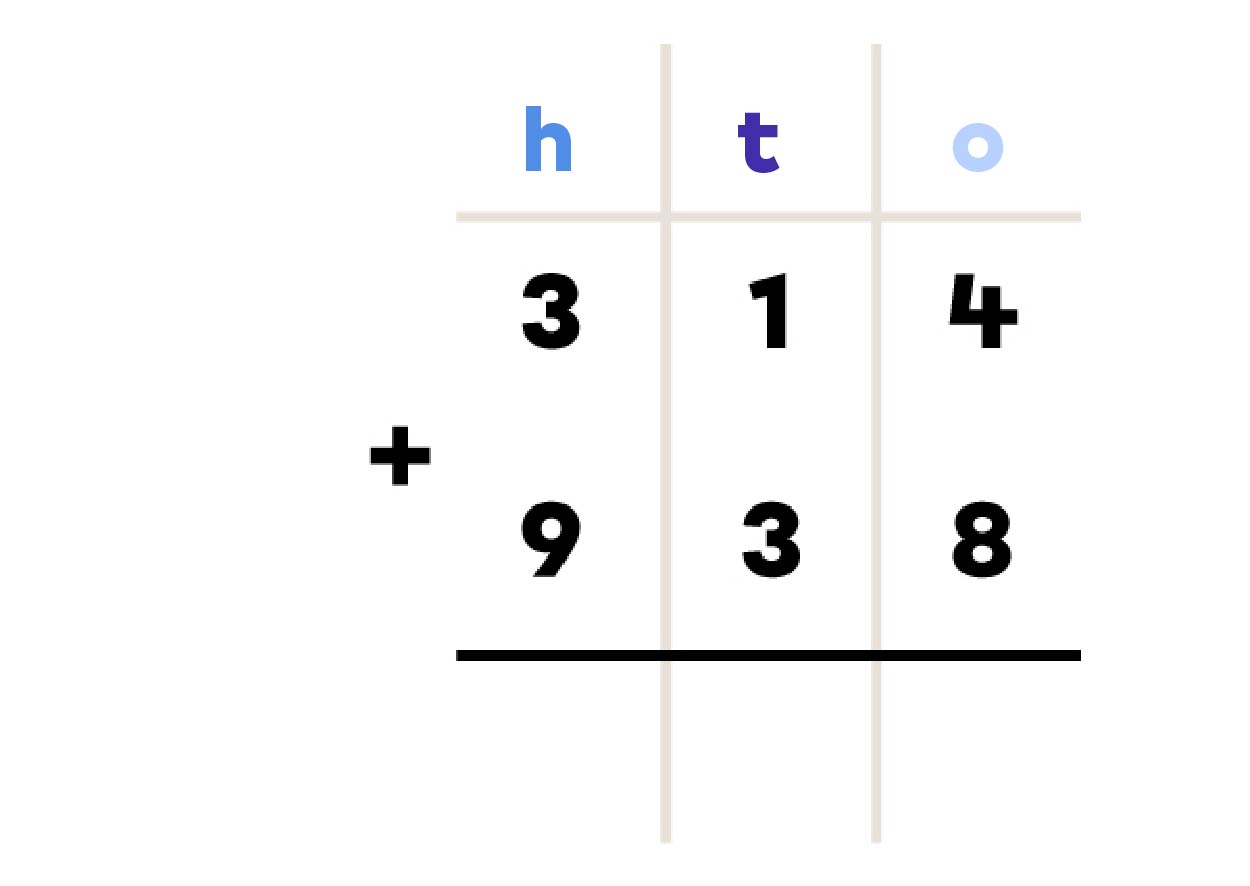
314 + 938 = ?

  1. I write the numbers one below the other by lining up the digits according to their place value.

etape 1
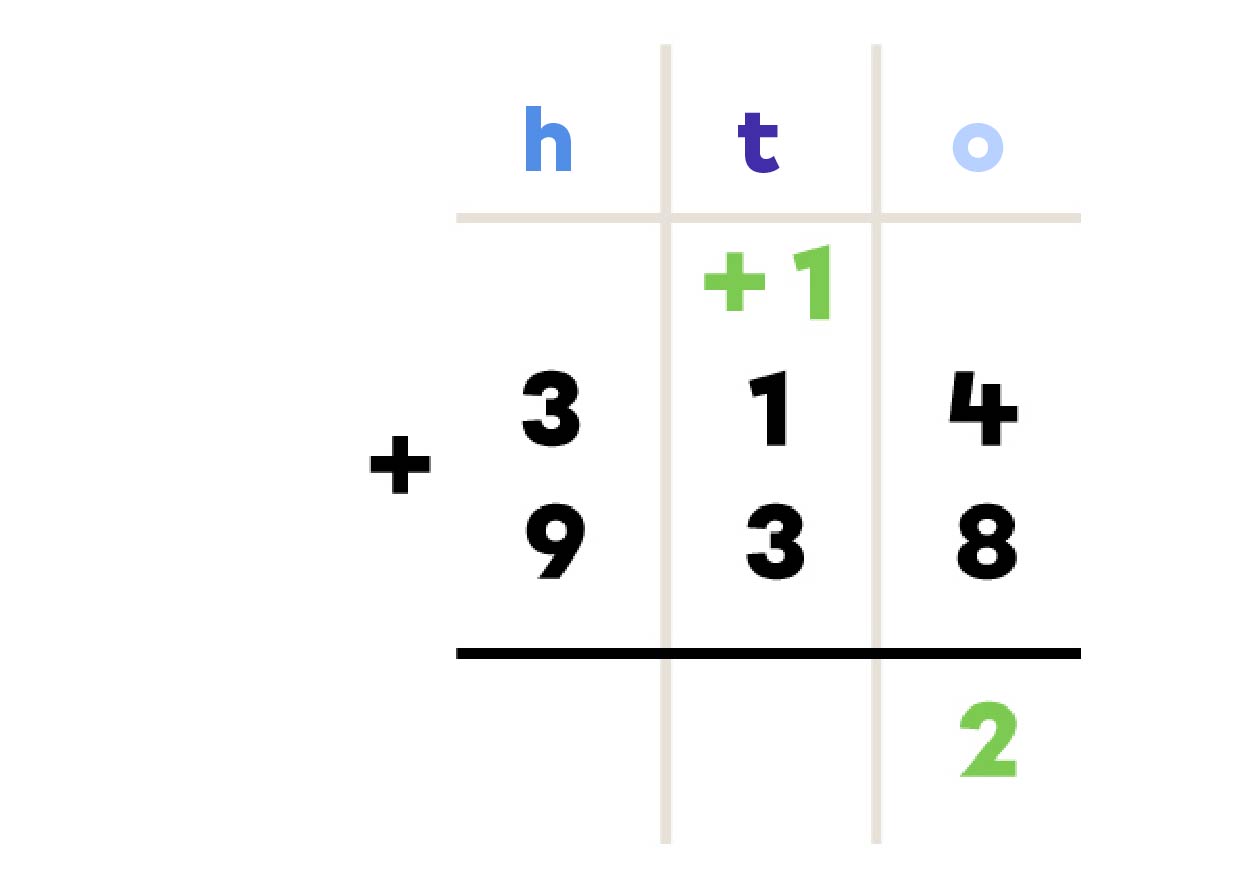
  1. I add the ones and I write the ones digit of the sum below the line.

    If there is a ten in the result, I regroup the ten above the digit in the tens position.

    4 + 8 = 12

etape 2
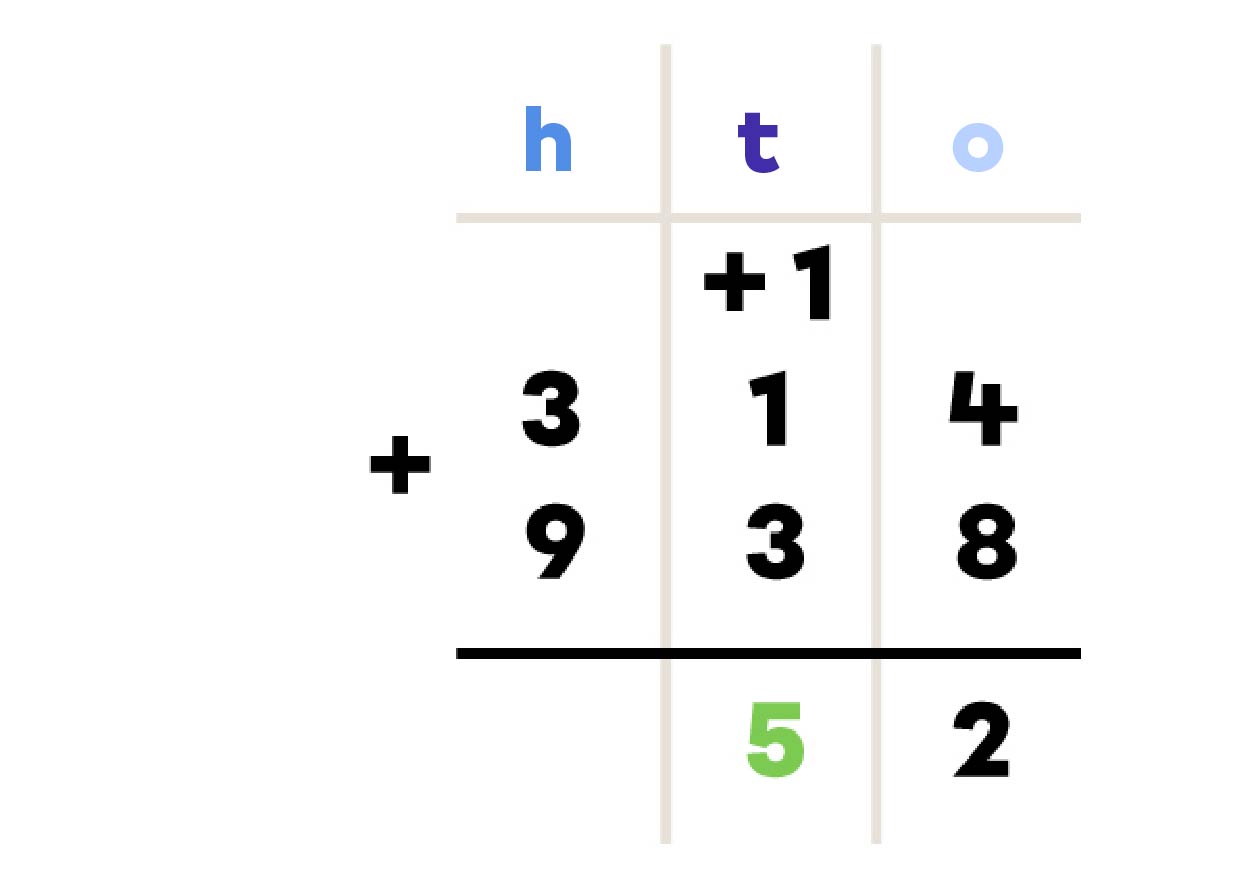
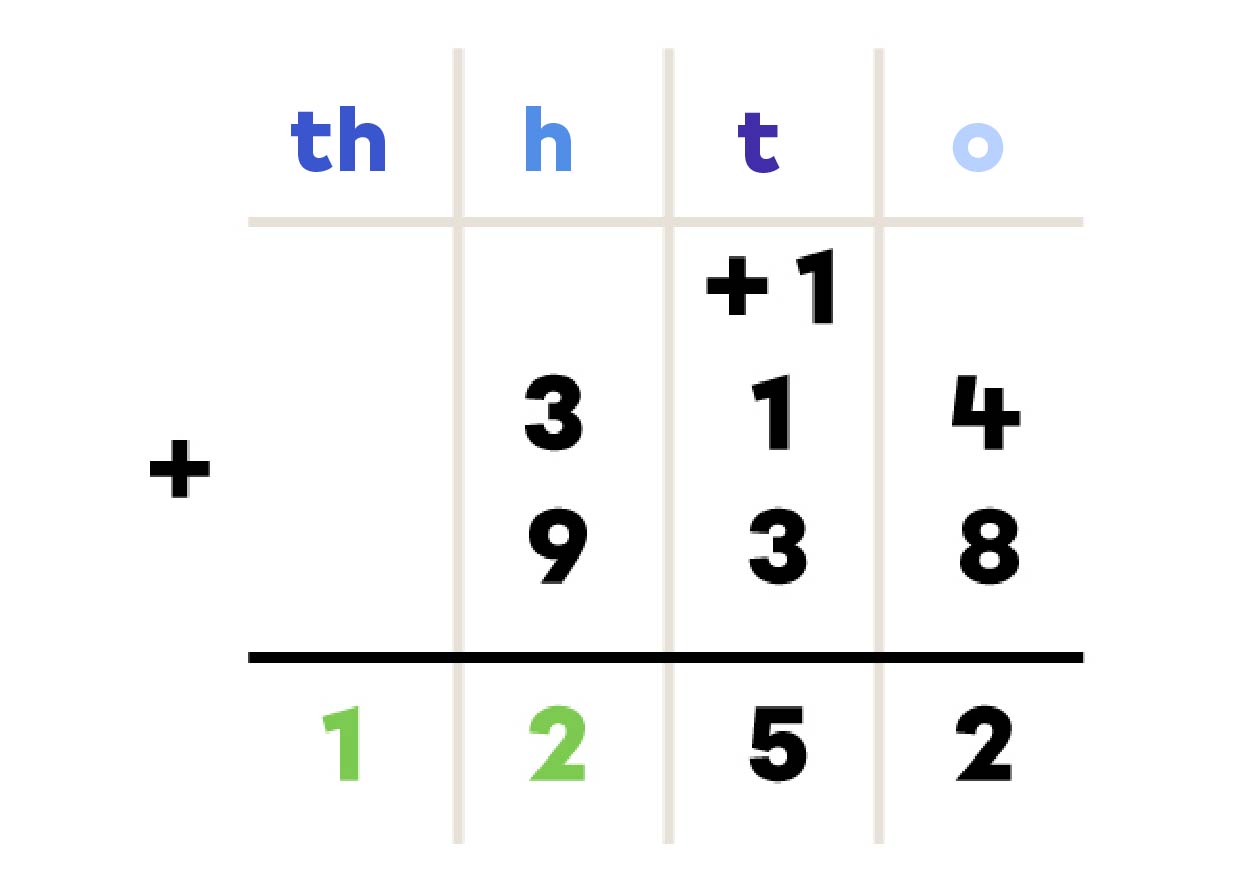
  1. I repeat step 2 for all positions. I do not forget to add the regrouped amount if there is one.

    The next position is the tens place: 1 + 3 = 4.

    I add the regrouped amount: 4 + 1 = 5.

    I add the hundreds: 3 + 9 = 12.

    Since there are no more numbers to add, I put the 1 in the thousands place.

etape 3
etape 4

314 + 938 = 1 252

Adding Numbers (Grades 3 - 4)

Adding Numbers (Grades 3 - 4)

Exercise - Adding Numbers (3rd and 4th grade)

'

See also